
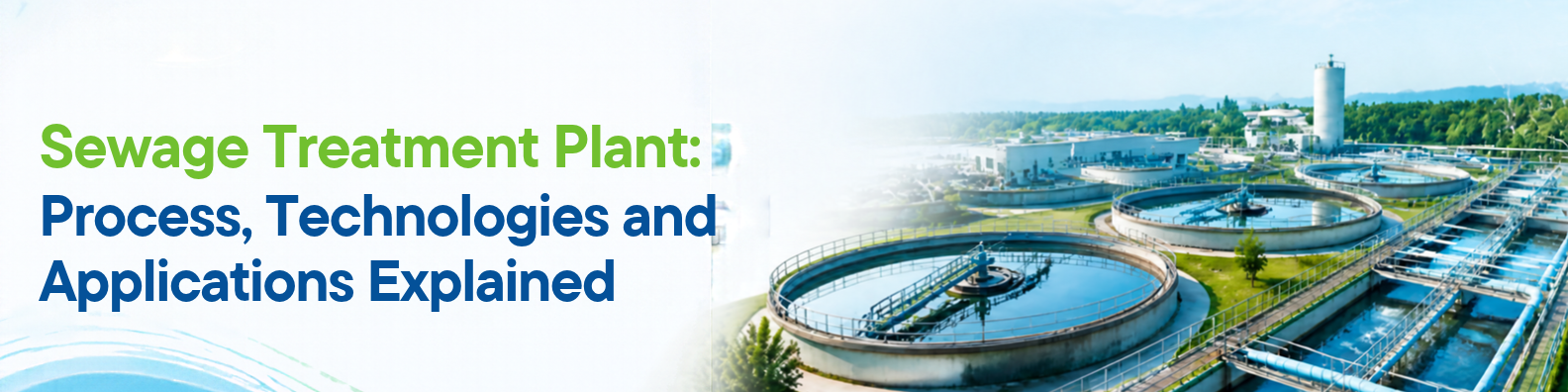
Sewage Treatment Plant: Process, Technologies and Applications Explained
Water is an essential resource for residential, commercial and industrial activities. However, daily activities generate large volumes of wastewater containing organic matter, suspended solids, nutrients, oils, chemicals and microorganisms. If this wastewater is discharged without adequate treatment, it can contaminate natural water sources, damage ecosystems and create serious public health concerns.
A Sewage Treatment Plant (STP) plays an important role in managing wastewater by removing contaminants through a combination of physical, chemical and biological treatment processes. The treated water can then be safely discharged, subject to applicable standards, or further purified for suitable reuse applications.
As water conservation becomes increasingly important, sewage treatment systems are also helping residential communities, commercial facilities and industries reduce freshwater consumption and improve wastewater management.
Understanding how an STP works, the technologies involved and the factors influencing system selection can help organisations develop more efficient wastewater treatment strategies.
What Is a Sewage Treatment Plant?
A sewage treatment plant is a facility designed to remove physical, chemical and biological contaminants from domestic or municipal wastewater before it is released into the environment or reused.
Sewage generally originates from toilets, kitchens, bathrooms, laundry facilities and other domestic activities. It contains suspended solids, biodegradable organic compounds, nutrients, detergents and potentially harmful microorganisms.
An STP uses multiple treatment stages to separate solids, break down organic pollutants, reduce microbial contamination and improve the overall quality of wastewater.
A typical sewage treatment process follows this sequence:
Preliminary Treatment → Primary Treatment → Biological Treatment → Secondary Clarification → Tertiary Treatment → Disinfection → Reuse or Discharge
The exact configuration depends on wastewater characteristics, treatment capacity, available space, regulatory requirements and the intended application of treated water.
How Does a Sewage Treatment Plant Work?
A sewage treatment plant operates through several interconnected stages. Each stage is designed to remove specific contaminants and prepare wastewater for the next treatment process.
1. Preliminary Treatment
Preliminary treatment is the first stage of the sewage treatment process. Its primary purpose is to remove large physical materials that could damage pumps, pipes and other treatment equipment.
This stage generally involves:
- Screening: Removes plastics, paper, cloth, leaves and other large debris from incoming sewage.
- Grit Removal: Separates heavier inorganic materials such as sand, gravel and small stones.
- Oil and Grease Removal: Separates floating oils and grease where required by the wastewater characteristics.
Effective preliminary treatment protects downstream equipment, reduces maintenance requirements and improves the performance of subsequent treatment stages.
2. Primary Treatment
After preliminary treatment, wastewater enters primary settling tanks or clarifiers. During this stage, suspended solids settle at the bottom due to gravity, forming primary sludge.
Floating materials such as grease and oils are collected from the surface using suitable skimming arrangements.
Primary treatment reduces the suspended solids and organic load entering the biological treatment stage. This makes subsequent treatment processes more efficient.
3. Biological Treatment
Biological treatment is one of the most important stages of a sewage treatment plant. It uses microorganisms to break down biodegradable organic matter present in wastewater.
Microorganisms consume organic pollutants and convert them into simpler substances, new biological cells and other by-products.
Several biological treatment technologies are commonly used in modern STP systems.
Activated Sludge Process (ASP)
The Activated Sludge Process is a widely used biological wastewater treatment method. It involves introducing air into wastewater to support the growth and activity of microorganisms.
The microorganisms form biological flocs that consume organic pollutants. The treated wastewater then moves to a secondary clarifier, where biological solids are separated from the treated water.
A portion of the settled sludge is returned to the aeration tank to maintain the required microbial population, while excess sludge is removed for further treatment.
Moving Bed Biofilm Reactor (MBBR)
Moving Bed Biofilm Reactor technology uses specially designed plastic carriers or media inside a biological treatment tank. These carriers provide a surface for microorganisms to grow and form biofilms.
As wastewater passes through the reactor, microorganisms attached to the media break down organic pollutants.
Some important advantages of MBBR technology include:
- Compact treatment system design.
- High biomass concentration within the reactor.
- Flexible operation and treatment capacity.
- Potential for upgrading existing wastewater treatment plants.
- Reduced dependence on conventional sludge recirculation arrangements.
MBBR systems are particularly useful where space availability and treatment efficiency are important considerations.
Sequencing Batch Reactor (SBR)
A Sequencing Batch Reactor is a biological treatment system that performs different wastewater treatment stages within the same tank through controlled operating cycles.
Its main operating stages include:
- Fill: Incoming wastewater enters the reactor.
- React: Biological treatment takes place through controlled aeration and mixing.
- Settle: Biological solids settle at the bottom of the tank.
- Decant: Treated water is removed from the reactor.
- Idle: The system prepares for the next treatment cycle.
SBR technology offers operational flexibility and can be suitable for residential developments, commercial facilities and applications with varying wastewater flows.
Membrane Bioreactor (MBR)
Membrane Bioreactor technology combines biological wastewater treatment with membrane filtration. It uses membranes to separate suspended biological solids from treated wastewater.
Unlike conventional activated sludge systems that rely primarily on secondary clarification, MBR systems use membrane separation to produce a high-quality treated effluent with low suspended solids.
Key benefits of MBR technology include:
- High-quality treated water.
- Effective separation of suspended solids.
- Compact plant configuration.
- Potential for higher biomass concentrations.
- Suitability for applications requiring advanced water reuse.
MBR systems are particularly useful where space is limited or where higher treated-water quality is required for further purification and reuse.
4. Secondary Clarification
In conventional biological treatment systems, wastewater moves into secondary clarifiers after the aeration stage.
These tanks allow biological solids to settle, separating the treated water from the biomass. The settled sludge is partly returned to the biological treatment process, while excess sludge is transferred for further handling.
Secondary clarification plays an important role in reducing suspended solids and maintaining the overall performance of the treatment plant.
In membrane-based systems such as MBR, membrane separation performs the solid-liquid separation function instead of conventional secondary clarification.
5. Tertiary Treatment and Advanced Filtration
Depending on the intended use of treated wastewater, additional purification may be necessary after biological treatment.
Tertiary treatment helps improve water quality by removing residual suspended particles, organic compounds, dissolved contaminants and other impurities.
Common technologies used during this stage include:
- Sand Filtration: Removes remaining suspended particles and turbidity.
- Multimedia Filtration: Uses different filtration layers to improve the removal of suspended solids.
- Activated Carbon Filtration: Helps reduce certain organic compounds, colour and undesirable odours.
- Ultrafiltration (UF): Uses membrane separation to remove fine suspended particles, colloids and many microorganisms.
- Reverse Osmosis (RO): Reduces dissolved salts and other contaminants when a higher level of purification is required.
The selection of tertiary treatment technologies depends on the quality of incoming wastewater and the requirements of the intended reuse application.
6. Disinfection of Treated Wastewater
Even after biological and filtration treatment, wastewater may contain microorganisms that need to be controlled before discharge or reuse.
Disinfection is used to reduce microbiological contamination and improve the safety of treated water.
Common disinfection methods include:
Chlorination
Chlorination involves adding chlorine-based disinfectants to treated water to control harmful microorganisms. It is widely used because of its effectiveness and ability to provide residual disinfection protection.
Ultraviolet (UV) Disinfection
UV treatment uses ultraviolet radiation to inactivate microorganisms without adding chemical disinfectants to the water. It is commonly used in systems where chemical-free disinfection is preferred.
Ozonation
Ozonation uses ozone as a strong oxidising and disinfecting agent. It can help control microorganisms and oxidise certain organic contaminants.
The appropriate disinfection method should be selected according to the treated-water quality requirements and the intended application.
What Happens to Sludge Generated During Sewage Treatment?
Sludge is a by-product generated during sewage treatment when suspended solids and biological matter are separated from wastewater.
Proper sludge management is essential for maintaining plant efficiency and ensuring environmentally responsible waste handling.
Sludge treatment generally involves the following processes:
- Sludge Thickening: Reduces the volume of sludge by separating excess water.
- Sludge Dewatering: Removes additional moisture using equipment such as filter presses or centrifuges.
- Sludge Stabilisation: Reduces organic activity and improves handling characteristics where required.
- Final Disposal or Recovery: Processed sludge is sent for suitable disposal or further resource recovery in accordance with applicable requirements.
Efficient sludge management helps reduce transportation costs, improve plant operations and minimise environmental impact.
Why Are Sewage Treatment Plants Important?
Sewage treatment plants are essential for responsible wastewater management. They provide several environmental, operational and economic benefits.
1. Protection of Water Resources
Treating sewage before discharge reduces the release of organic matter, suspended solids and other pollutants into rivers, lakes and groundwater resources.
2. Improved Public Health
Untreated sewage can contain disease-causing microorganisms. Effective wastewater treatment and disinfection help reduce microbiological risks and protect surrounding communities.
3. Water Conservation
Treated wastewater can be reused for suitable non-potable applications. This reduces dependence on freshwater sources and supports more efficient water utilisation.
4. Environmental Protection
Proper sewage treatment helps reduce the pollutant load entering natural water bodies, supporting healthier aquatic ecosystems and improved environmental conditions.
5. Regulatory Compliance
Residential, commercial and industrial facilities must meet applicable wastewater discharge and reuse requirements. A properly designed and operated STP helps facilities achieve the required treated-water quality.
Applications of Sewage Treatment Plants
STP systems are used across different sectors depending on wastewater generation, treatment capacity and water reuse requirements.
Residential Complexes and Housing Societies
Apartment buildings, gated communities and residential townships generate wastewater from kitchens, bathrooms, toilets and laundry activities. STPs help treat this wastewater for compliant discharge or suitable reuse, such as gardening and toilet flushing.
Commercial Buildings and Hotels
Hotels, shopping malls, office complexes and commercial establishments require wastewater treatment systems to manage sewage generated by employees, visitors and daily operations.
Hospitals and Educational Institutions
Hospitals, schools, universities and other institutions generate significant wastewater volumes. Appropriate treatment systems help manage wastewater before discharge or reuse.
Municipal Wastewater Treatment
Municipal sewage treatment plants process wastewater collected from cities, towns and surrounding residential areas. These facilities are essential for managing large wastewater volumes and protecting public water resources.
Industrial Campuses
Manufacturing facilities and industrial campuses may require sewage treatment for domestic wastewater generated by employees and supporting infrastructure. Industrial process wastewater generally requires separate evaluation and treatment through suitable effluent treatment systems.
Sewage Treatment Plant vs Effluent Treatment Plant
Sewage Treatment Plants and Effluent Treatment Plants are both used for wastewater management, but they serve different purposes.
| Parameter | Sewage Treatment Plant (STP) | Effluent Treatment Plant (ETP) |
|---|---|---|
| Primary Purpose | Treats domestic and municipal sewage. | Treats wastewater generated from industrial processes. |
| Wastewater Source | Residential buildings, offices, institutions and communities. | Factories, manufacturing units and industrial processes. |
| Common Contaminants | Organic matter, suspended solids, nutrients and microorganisms. | Chemicals, oils, dissolved salts, metals, organic pollutants and suspended solids. |
| Treatment Methods | Physical, biological, filtration and disinfection processes. | Physical, chemical, biological and advanced treatment processes. |
| Reuse Applications | Gardening, flushing, cleaning and other suitable applications. | Industrial utilities, process applications and other suitable reuse purposes. |
The treatment system should always be selected according to the source and characteristics of the wastewater rather than assuming that one treatment technology can address every type of effluent.
How to Choose the Right Sewage Treatment Plant?
Selecting an appropriate sewage treatment system requires an understanding of wastewater characteristics, operational requirements and the quality of treated water needed.
1. Analyse Wastewater Characteristics
Before selecting an STP, wastewater should be analysed for important parameters such as:
- Biochemical Oxygen Demand (BOD)
- Chemical Oxygen Demand (COD)
- Total Suspended Solids (TSS)
- pH levels
- Total Dissolved Solids (TDS)
- Nitrogen and phosphorus
- Microbiological contamination
This analysis helps determine the treatment requirements and the appropriate combination of technologies.
2. Determine Treatment Capacity
Plant capacity should be calculated based on the average and peak wastewater generation. Residential occupancy, commercial activity, future expansion and daily flow variations should also be considered.
3. Evaluate Available Space
Available land and installation space can influence the selection of treatment technology. Compact solutions such as MBR and certain SBR configurations may be considered for sites with space limitations.
4. Consider Operating and Maintenance Costs
The total cost of an STP extends beyond its initial installation. Electricity consumption, chemical requirements, membrane cleaning, sludge disposal, maintenance and replacement of consumables should all be evaluated.
5. Define Water Reuse Requirements
The intended application of treated water plays a major role in determining the treatment configuration. Water intended for gardening or flushing may require a different treatment level compared with water intended for more demanding applications.
6. Evaluate Automation and Monitoring
Modern treatment plants can incorporate automated controls and monitoring systems to regulate aeration, chemical dosing, flow rates and other operating parameters. Appropriate automation can improve process consistency and help identify operational issues.
The Role of Water Treatment Chemicals in Sewage Treatment
Chemical treatment plays an important supporting role in many sewage and wastewater treatment systems. Depending on wastewater characteristics and treatment objectives, specialised chemicals can improve contaminant removal and process performance.
Common chemicals and treatment products include:
- Coagulants: Help destabilise suspended and colloidal particles so they can be separated from water.
- Flocculants: Promote the formation of larger flocs, improving clarification and solid-liquid separation.
- Antifoams: Help control unwanted foam formation in biological and other treatment processes.
- Activated Carbon: Helps adsorb certain organic contaminants, colour-causing compounds and odour-producing substances.
- Membrane Chemicals: Antiscalants, cleaners and other specialised formulations help control fouling and maintain membrane performance.
The selection and dosage of treatment chemicals should be based on wastewater analysis, process conditions and appropriate technical evaluation.
Water Reuse After Sewage Treatment
One of the major advantages of an effective sewage treatment system is the opportunity to recover and reuse wastewater.
Instead of discharging all treated water, facilities can evaluate opportunities to use it for applications that do not require drinking-water quality.
Depending on the treatment level and applicable requirements, treated wastewater may be reused for:
- Landscape irrigation and gardening.
- Toilet flushing.
- Floor and equipment cleaning.
- Cooling tower makeup water.
- Selected industrial utility applications.
- Other suitable non-potable purposes.
Where higher water quality is required, additional purification technologies such as ultrafiltration and reverse osmosis can be incorporated into the treatment system.
Water reuse planning should begin during the system design stage so that treatment technologies can be selected according to the intended application.
Mapril: Water Treatment Products and Solutions for Wastewater Management
Effective wastewater management requires the right combination of treatment technologies, filtration products and chemical solutions. Different wastewater streams demand different treatment approaches depending on their physical, chemical and biological characteristics.
Mapril provides a portfolio of water and wastewater treatment products and solutions designed to address a range of industrial and environmental purification requirements.
Its product range includes:
- Coagulants and Flocculants: Products used to support clarification, particle removal and solid-liquid separation.
- Activated Carbon: Adsorption media used in water and wastewater treatment applications.
- Ion Exchange Resins: Specialised resins used for different water purification and treatment requirements.
- Membrane Technologies: RO, NF, UF and MBR membrane solutions for filtration and advanced water treatment.
- Antifoam Products: Solutions designed to control foam formation in wastewater and industrial processes.
- Filtration Media: Different filtration materials used in water purification and treatment systems.
Choosing the appropriate treatment products and technologies requires an assessment of wastewater composition, process conditions and the desired treatment outcome.
Through its range of water treatment chemicals, membranes, resins and filtration products, Mapril supports industries in addressing different water and wastewater treatment challenges.
To explore available water treatment solutions, visit Mapril’s Environment and Purification solutions.
Conclusion
Sewage treatment plants are an essential part of modern wastewater management. They help remove contaminants from domestic and municipal sewage, protect natural water resources and create opportunities for treated-water reuse.
From preliminary screening and primary clarification to biological treatment, advanced filtration and disinfection, every stage contributes to improving the quality of wastewater.
The selection of an appropriate STP depends on wastewater characteristics, treatment capacity, available space, operational costs and the intended use of treated water.
As industries and communities focus more on water conservation, combining effective wastewater treatment with advanced purification and recycling technologies can help build a more sustainable water management system.
Looking for suitable water treatment chemicals, filtration media, ion exchange resins or membrane technologies? Connect with Mapril to explore solutions for your water and wastewater treatment requirements.